This post contains affiliate links. We may earn a commission if you make a purchase through these links, at no extra cost to you. As an Amazon Associate I earn from qualifying purchases.
The sound of a baseball hitting a bat is the heartbeat of the game, but the sound of a ball hitting a helmet is a reminder of its dangers. As pitch speeds rise, protective gear has evolved from leather caps to sophisticated composite structures. For players, parents, and coaches, understanding the difference between the materials used in today’s top batting helmets is essential for making an informed safety choice.
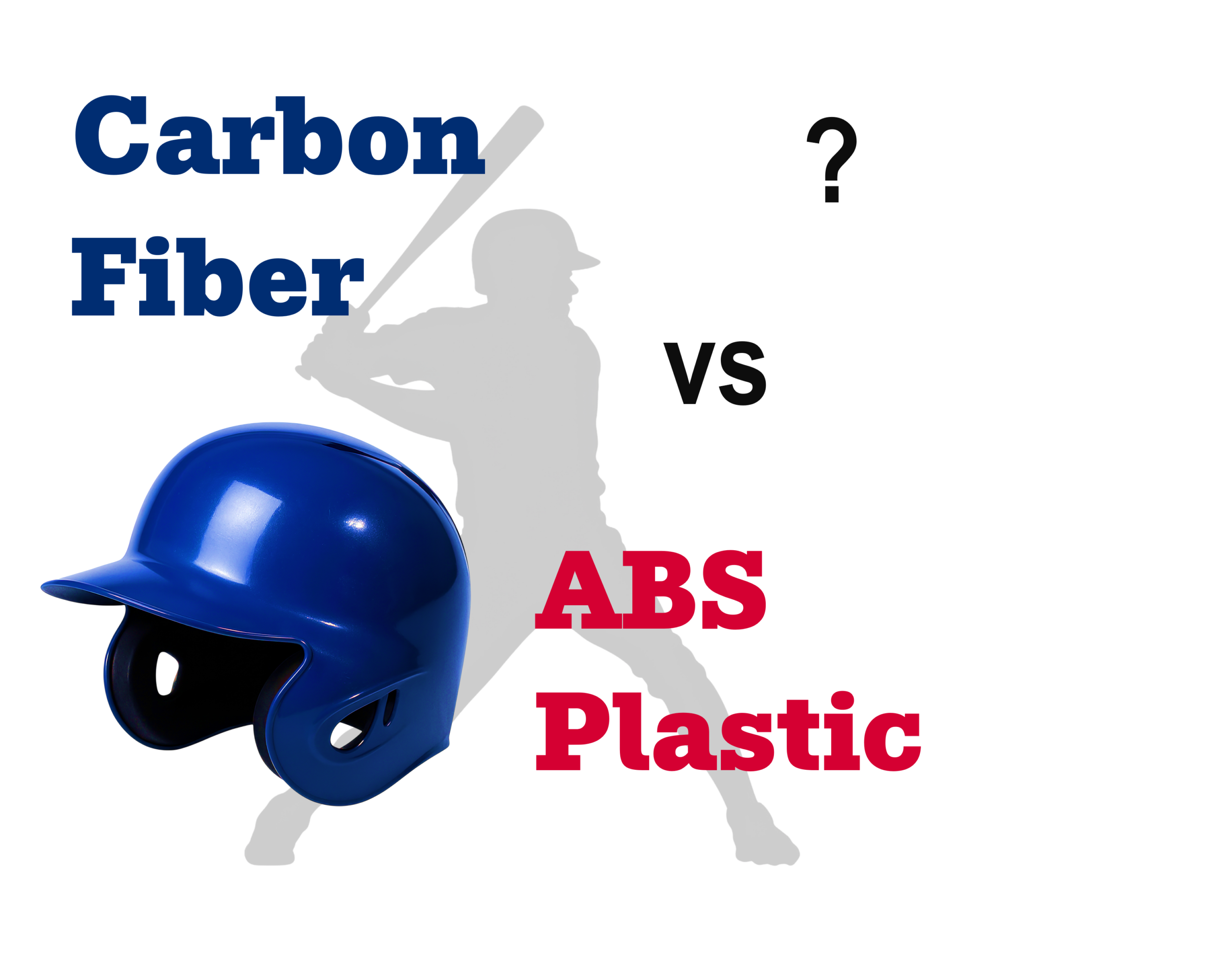
The primary debate in modern helmet construction centers on two materials: Acrylonitrile Butadiene Styrene (ABS) plastic and Carbon Fiber. While both must meet mandatory safety standards, their performance, weight, and price differ significantly.
The Evolution of Helmet Materials: From Leather to Engineering Plastics
Historically, batting helmets were an afterthought, and players took the field unprotected until the 1950s. The first plastic helmets were crude, but by the 1970s, ABS plastic became the standard, offering a rigid, cost-effective solution for shock absorption.
In recent years, the push for better concussion mitigation has brought elite-level materials like carbon fiber into the mainstream. This evolution has been driven by the need for helmets that can withstand 100 mph+ impacts without adding excessive weight.
ABS Plastic Batting Helmets: The Reliable Standard
ABS (Acrylonitrile Butadiene Styrene) is a thermoplastic polymer known for its toughness and durability. It is the most common material used in baseball helmets today.
Pros of ABS Helmets:
- High Impact Resistance: ABS plastic excels at absorbing high-impact energy, making it highly effective at preventing skull fractures.
- Cost-Effective: Because manufacturing processes are well-established, ABS helmets are accessible for all budget levels.
- Flexibility: ABS offers a degree of flex, which can be advantageous in dispersing energy during an impact.
Cons of ABS Helmets:
- Weight: To achieve necessary strength, ABS shells are generally thicker, making them heavier than composite options.
- Neck Fatigue: The added weight can lead to neck strain over long doubleheaders.
Top-selling ABS options, such as the Easton Alpha Batting Helmet, are engineered with high-impact ABS thermoplastic shells and dual-density foam liners to meet NOCSAE standards.
Carbon Fiber Batting Helmets: The High-Performance Choice
Carbon fiber helmets represent the pinnacle of protective technology, utilizing aerospace-grade carbon weave layered with epoxy resin.
Pros of Carbon Fiber Helmets:
- Superior Strength-to-Weight Ratio: These helmets are significantly lighter than ABS alternatives, reducing inertia and neck fatigue.
- Advanced Protection: Many carbon fiber helmets are tested for higher ball speeds, including 100 mph fastballs.
Cons of Carbon Fiber Helmets:
- Higher Cost: Carbon fiber’s premium construction leads to a much higher price point compared to plastic alternatives.
- Brittle Nature: While strong, carbon fiber behaves differently than ABS, dispersing energy rather than flexing to absorb it.
The Rawlings Mach Carbon helmet is a premier example of this technology, often using a hybrid carbon/ABS design to provide increased stiffness in high-impact areas while meeting strict safety benchmarks.
Material Science Comparison: Impact and Safety
The primary purpose of a helmet is to protect against concussions and catastrophic head injuries. According to the CPSC, materials are engineered to absorb high-impact energies that can cause skull fractures, rather than to specifically prevent concussions.
- Impact Dispersion: Carbon fiber’s rigid, woven structure dissipates impact force over a wider area instantly.
- Flexibility vs. Rigidity: ABS thermoplastic helmets often provide slightly more flexibility, which can be effective in lowering rotational acceleration in some lower-speed impacts.
Performance Comparison: What Matters in the Box
For competitive players, the choice often boils down to weight, comfort, and protection level.
1. Weight and Comfort
Carbon fiber is undeniably lighter, which is favored by professional and collegiate players who want to reduce neck fatigue over long seasons. A lighter helmet also has less rotational inertia, which is crucial in reducing the rotational forces that contribute to concussions.
2. Durability
Carbon fiber shells are highly resistant to degradation from UV radiation and environmental factors, ensuring that the helmet maintains its structural integrity over a longer period.
3. Cost vs. Value
While carbon fiber offers the best protection, a quality ABS helmet—such as the Mizuno B6, featuring a honeycomb shell pattern—can still provide high-level safety, especially when upgraded with a C-flap or jaw guard.
Final Verdict: Choosing the Right Protective Headgear
The “best” helmet depends on the level of play and personal comfort.
- For Youth/Beginners: A high-quality ABS thermoplastic helmet is more than sufficient.
- For High School/Collegiate/Elite Players: Investing in a carbon fiber or hybrid helmet, such as the Rawlings Mach Carbon (which is designed for 95+ mph protection), provides superior comfort, lighter weight, and elite protection.
Regardless of material, it is crucial that the helmet has a NOCSAE stamp and fits properly. The most advanced carbon fiber helmet in the world cannot protect a player if it is too loose.
Note: For maximum safety, consider pairing your helmet with a compatible jaw guard or C-flap, which has become standard at many, if not all, levels of play.